Texas Strategic Leadership
Empowering Districts. Aligning Systems. Driving Student Success.
Building leadership capacity to transform student outcomes.
What Is Texas Strategic Leadership?
 Texas Strategic Leadership (TSL) equips districts with the tools, coaching, and processes needed to develop and sustain a comprehensive long-range plan focused on improving student outcomes. Designed as a two-year program, TSL guides leaders through the creation of a high-quality strategic plan and the establishment of performance management practices to implement it effectively.
Core Principles
- Student-Centered Vision: Every decision starts with the desired student experience.
- Systems Alignment: Campus and district systems working in sync.
- Performance Management: Continuous monitoring and improvement.
- Stakeholder Engagement: Collaboration with educators, families, and the community.
How It Works
- Landscape Analysis: Understand your district’s current state and priorities.
- Strategic Plan: Develop 3–5-year goals aligned to student outcomes.
- Aligned Processes: Strengthen systems that support your envisioned student experience.
- Ongoing Coaching: Receive guidance from TSL specialists throughout implementation.
Why It Matters
Districts with aligned systems see measurable gains in student achievement. TSL ensures every plan is more than a document—it’s a living framework that guides real change in classrooms, campuses, and communities.
Strategic Planning and Progress Monitoring
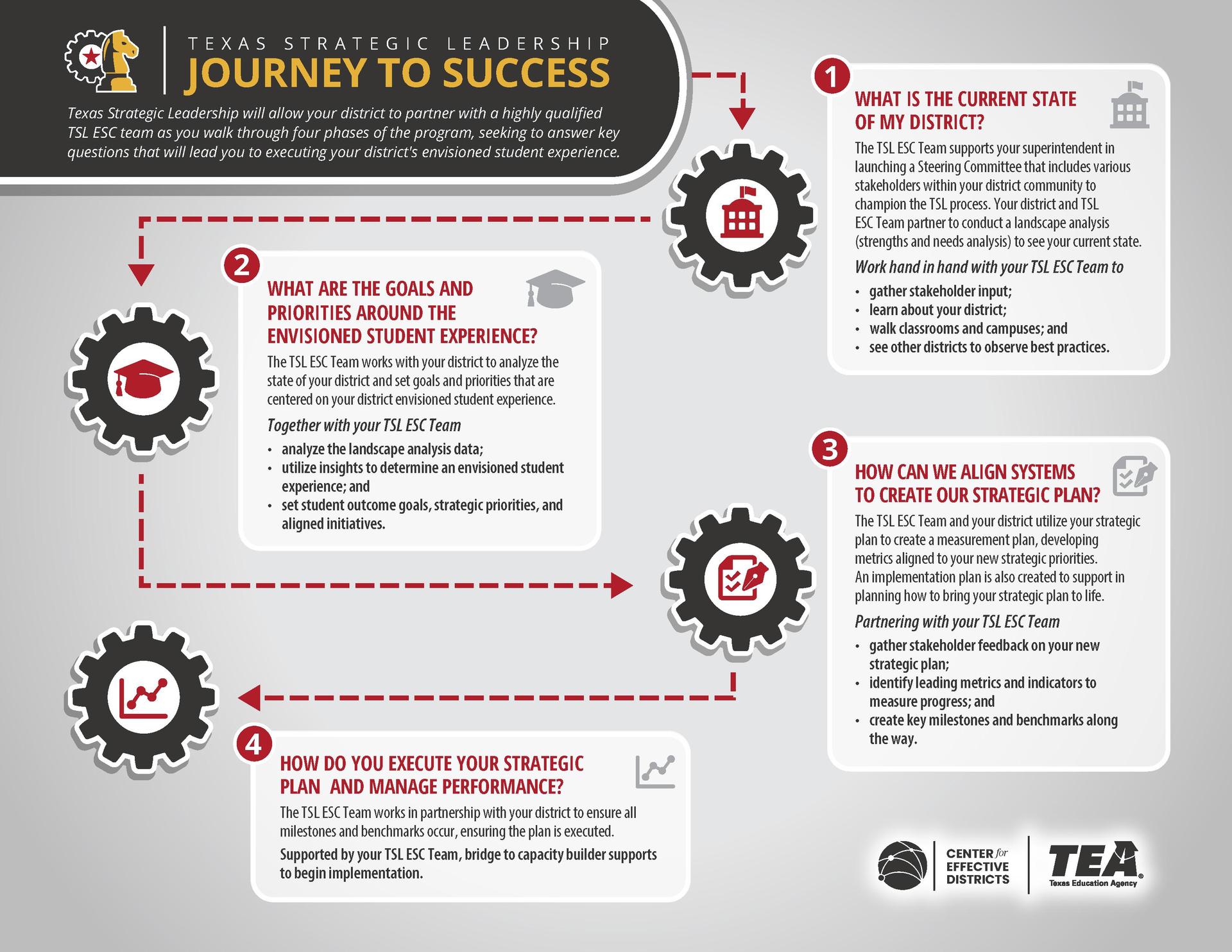
Lasting improvement goes beyond drafting a plan—it requires walking with leaders through every stage of implementation. The Strategic Planning Hub provides coaching and facilitated support to design, launch, and sustain initiatives, while building systems to monitor progress and measure impact. Through checkpoints, reviews, and peer learning, leaders ensure their plans remain living documents—resilient, actionable, and accountable for real results.
These services are grounded in Texas Strategic Leadership (TSL) and aligned with the Effective District Framework (EDF). Districts are guided through the EDF Diagnostic process to identify strengths and growth areas, ensuring that planning connects directly to instructional priorities. Strategic initiatives are not designed in isolation; they are intentionally tied to statewide and district-level efforts such as High-Quality Instructional Materials (HQIM), Instructional Leadership, Strategic Compensation, Teacher Incentive Allotment and staffing models, and Multi-Tiered Systems of Support (MTSS). This integration ensures that every plan is both comprehensive and connected—driving progress that is measurable, sustainable, and responsive to student needs.