Online course available September 1, 2026–August 31, 2027
Review elementary science safety policies, procedures, classroom protocols, and teacher responsibilities. This self-paced course is designed for new and experienced K–5 science teachers.
Open Air Inquiry helps educators bring science learning beyond the classroom walls with outdoor exploration, observation, and hands-on investigation. Discover engaging ways to use nature as a powerful space for student curiosity and discovery.
Discover engaging small-group strategies that strengthen literacy skills through social studies instruction. Explore practical ways to build discussion, reading comprehension, and student collaboration in your classroom.
Build a stronger secondary math workshop with practical strategies for structure, routines, meaningful tasks, student engagement, and responsive instruction. Designed for grades 6–12 teachers, instructional coaches, and curriculum directors, each session can stand alone or connect across the full series.
Strengthen mathematics instruction through collaboration, reflection, and practical strategies for student engagement, reasoning, responsiveness, retention, and fluency. Designed for teachers, instructional coaches, and curriculum directors, each session can be attended individually or as part of the full series.
Explore creative ways to strengthen STEM fluency through hands-on learning, problem-solving, and innovation. Navigating the STEM Fluency Landscape helps educators build engaging STEM experiences that connect science, technology, engineering, and math in meaningful ways.
Prepare students for college-level math by connecting classroom instruction to TSIA2, SAT, and ACT expectations. Explore practical ways to build college readiness through purposeful, spaced, spiral, and interleaved practice.
Help students become active mathematical thinkers through collaboration, problem-solving, meaningful tasks, and purposeful assessment. This four-part series gives secondary math educators practical strategies for building classrooms where students take greater ownership of their learning.
Science Quest for Grades 3–5 brings TEKS-aligned science to life through hands-on learning across key strands like matter, energy, and Earth science. Build strong content knowledge and walk away with ready-to-use strategies that make elementary science engaging and meaningful.
Help elementary students become confident math problem solvers who reason, persevere, and explain their thinking. Explore practical routines, tasks, and teacher moves that strengthen curiosity and mathematical sense-making.
Strengthen secondary students' confidence, reasoning, and perseverance in mathematics. Experience practical tasks and instructional routines that encourage students to make sense of problems and clearly represent their thinking.
Region 7 ESC Dyslexia Day gives students with dyslexia a day to celebrate their strengths, build confidence, connect with others, and enjoy hands-on learning experiences. Dyslexia teachers can submit an interest form for their school to be considered for this special student event.
Help students use the STAAR-approved Desmos calculator as an effective problem-solving tool. Explore practical strategies that improve calculator efficiency, mathematical accuracy, and student confidence on STAAR.
Help secondary math students move beyond memorized procedures with this four-part series focused on conceptual understanding, mathematical reasoning, and lasting fluency through purposeful models, multiple representations, and student-centered strategies.
STEMsgiving brings elementary science and engineering to life with creative, seasonal STEM activities and hands-on learning. Explore engaging ideas that blend problem-solving, collaboration, and science fun perfect for elementary classrooms.
Discover how weather and climate data tell the story behind changing conditions while exploring real-world meteorology concepts. Weather by Design brings data analysis, weather patterns, and climate science together through engaging, hands-on learning that you can take back to the classroom.
Use writing to deepen student understanding in social studies while strengthening analysis, argument, and communication skills. Explore practical strategies that make meaningful writing manageable in grades 3-12.
8th Grade Social Studies U explores engaging strategies for teaching early American history and building student connections to the past. Discover fresh ideas, instructional resources, and classroom activities designed specifically for 8th grade social studies.
Join RLA educators for a hands-on professional learning experience with Tosh McGaughy focused on strengthening student thinking, writing instruction, and STAAR readiness. Explore TEKS-aligned strategies, ECR writing practices, and practical resources you can use right away to help students write with greater purpose, clarity, and confidence.
Swag and Brag brings ideas from the Texas Council for the Social Studies Conference back to Region 7 educators. Discover engaging social studies strategies, classroom resources, and fresh inspiration for instruction.
The Elementary Science Loop helps K-5 science teachers strengthen TEKS retention through continuous review, engaging warm-ups, station rotations, and targeted intervention strategies. Discover practical ways to build lasting science understanding and keep learning fresh all year long.
The Civics Training Program builds a strong foundation in civic education with practical strategies for teaching government, citizenship, and social studies. Walk away with ready-to-use ideas that help students connect real-world civic concepts to the classroom.
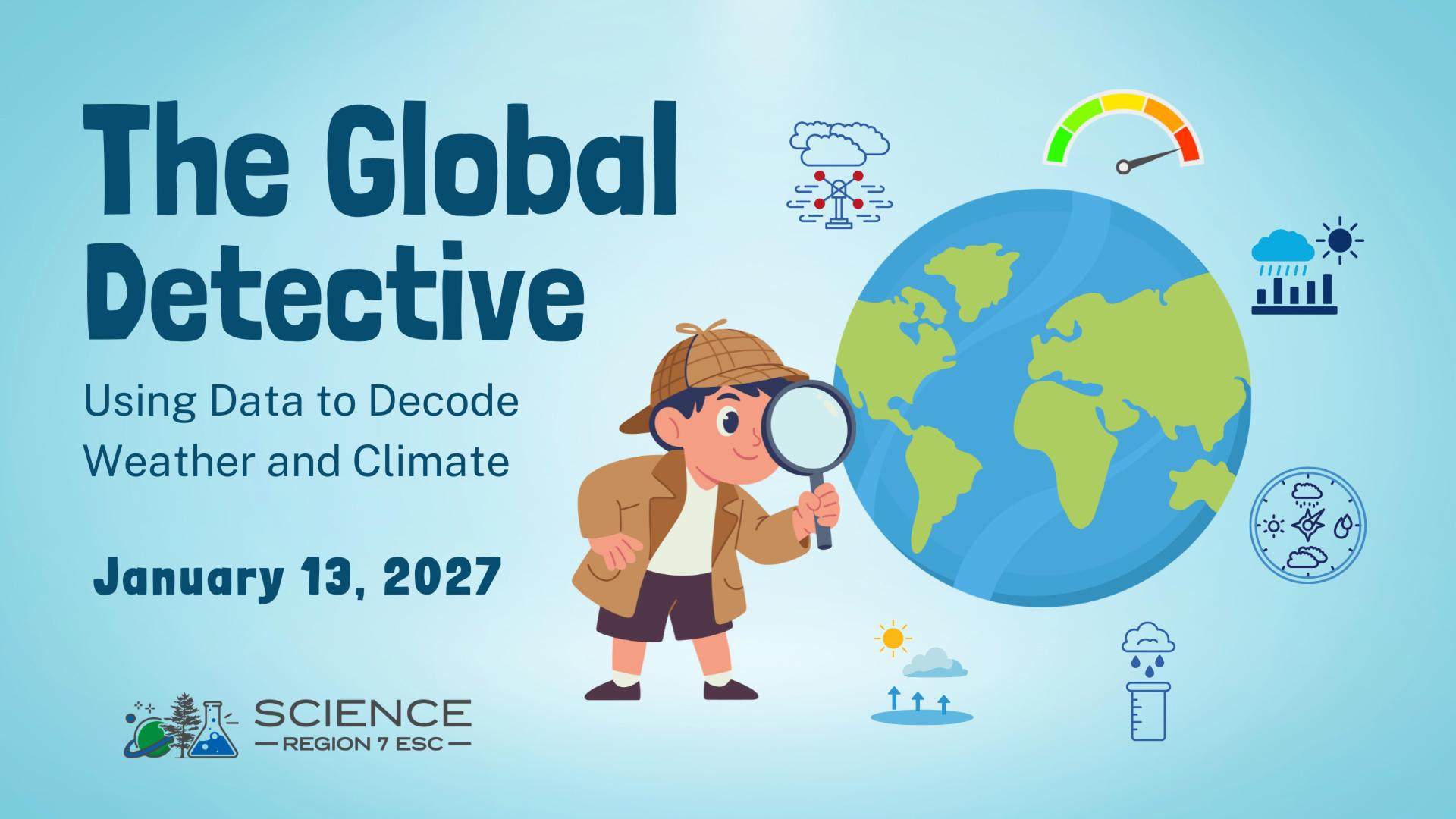
Turn weather and climate data into a global investigation for K–5 students. Teachers will analyze real-world graphs and tables and leave with student-friendly activities that build science, math, literacy, and data skills.
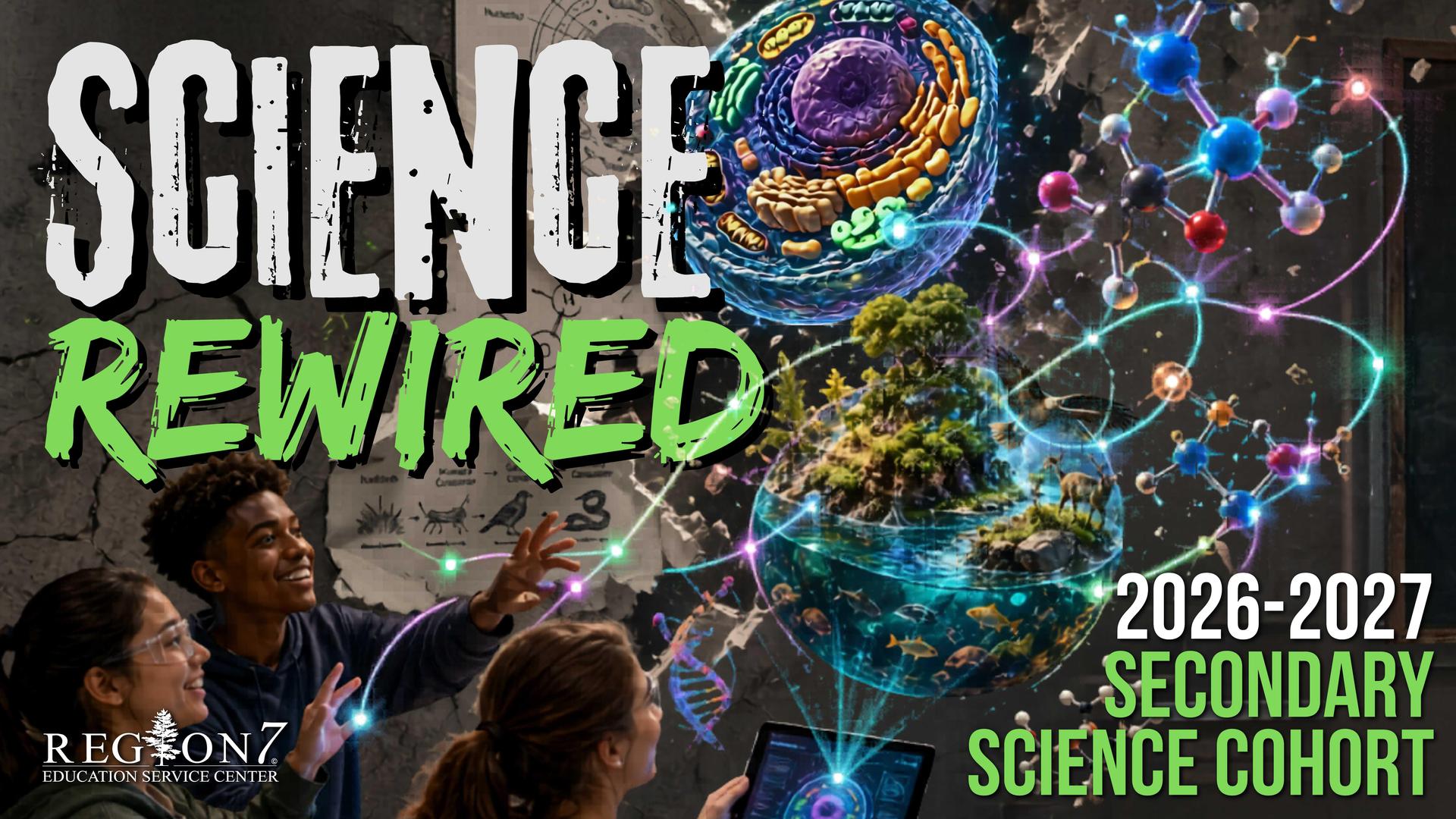
Rewire your secondary science instruction with practical strategies, collaboration, and ready-to-use classroom learning. Choose from grade-level and course-specific sessions in Biology, Chemistry, and Grades 6–8 designed to strengthen science instruction and connect you with fellow educators throughout the school year.
Continue collaborating with fellow U.S. History EOC teachers to unpack the TEKS, review essential content, share classroom-tested strategies, and plan stronger instruction together.
Explore the fourth-grade science TEKS through patterns in waves, the lunar cycle, and seasons. Participants will use hands-on learning to help students recognize patterns, scale, and changes in the natural world.